
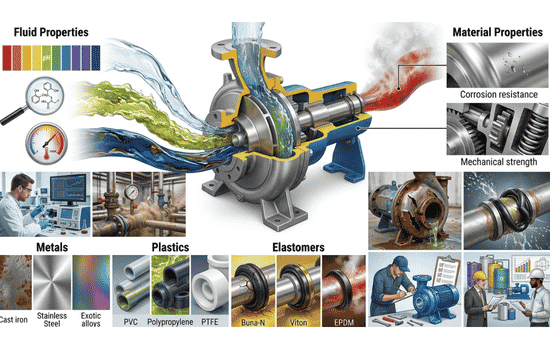
When choosing an industrial pump, you need to do more than just match flow rates and pressure. A crucial step is ensuring the pump’s materials can handle the fluids passing through them. If a liquid reacts negatively with the internal components, it can lead to catastrophic equipment failure, leaks, downtime, and safety risks, especially with hazardous liquids.
Key Factors Influencing Chemical Compatibility
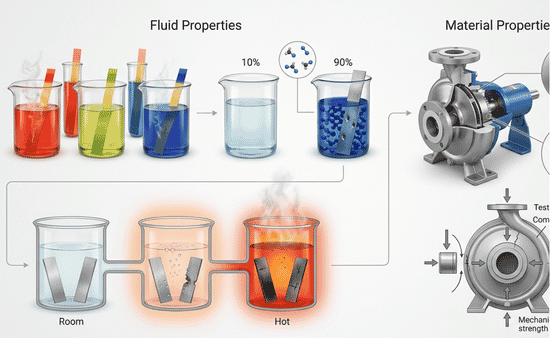
Finding the right match between a fluid and a pump requires evaluating several overlapping variables. A material that performs flawlessly in one scenario might fail entirely if the operating conditions shift.
Fluid properties
The characteristics of the liquid being pumped dictate the necessary material requirements. You must consider the pH level of the fluid to determine its acidity or alkalinity. Highly acidic or basic fluids require highly specific containment materials. The concentration of the chemical also plays a major role; a 10% solution of an acid might be safe for a certain plastic, while a 90% solution will destroy it. Furthermore, temperature drastically alters chemical reactivity. A fluid that is completely harmless at room temperature can become highly corrosive when heated to 150 degrees.
Material properties
Pump materials possess unique physical and chemical characteristics. Corrosion resistance determines how well a surface withstands chemical attacks over time. Mechanical strength is equally important, as the material must endure the physical stresses of pressure, friction, and fluid velocity without losing its structural integrity.
Common Pump Materials and Their Compatibility
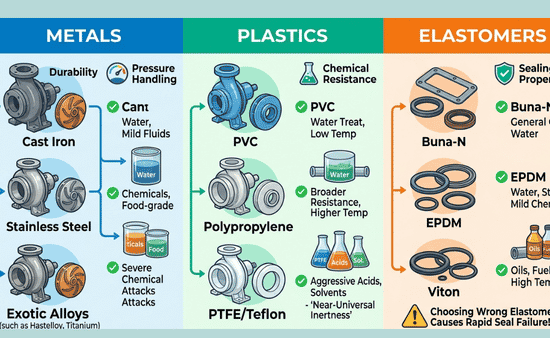
Manufacturers build equipment using a wide variety of materials to cover the massive spectrum of industrial fluids. Knowing the general categories will help you narrow down your choices.
Metals
Metals offer excellent durability and pressure handling. Cast iron is a standard choice for water and mild, non-corrosive liquids. Stainless steel provides a higher level of corrosion resistance, making it suitable for many moderate chemicals and food-grade applications. For extremely aggressive fluids, engineers often turn to exotic alloys like Hastelloy or titanium, which resist severe chemical attacks that would dissolve standard steel.
Plastics
Plastics are heavily utilized for their incredible resistance to corrosive substances. PVC is widely used for water treatment and lower-temperature chemical handling. Polypropylene offers broader chemical resistance and handles higher temperatures better than PVC. For the most demanding environments, PTFE (commonly known as Teflon) provides near-universal chemical inertness, making it a premium choice for highly aggressive acids and solvents.
Elastomers
Elastomers are the rubber-like materials used for seals, gaskets, and O-rings. Viton is excellent for handling oils, fuels, and high temperatures. EPDM performs wonderfully with water, steam, and mild chemicals. Buna-N is a standard choice for general-purpose oil and water sealing. Choosing the wrong elastomer can cause a seal to fail rapidly. Sometimes, engineers bypass traditional sealing issues entirely by using a regenerative turbine sealless pump, but you must still ensure the wetted casing and internal parts are fully compatible with the fluid.
Testing and Assessment Methods
You should never guess when it comes to material compatibility. Proper assessment ensures long-term reliability.
Lab testing vs. real-world conditions
Laboratory testing provides a baseline understanding of how a material reacts to a pure chemical. However, lab environments rarely replicate the exact conditions of a factory floor. Real-world applications often involve trace contaminants, pressure fluctuations, and temperature spikes. It is always wise to account for these operational variables rather than relying solely on sterile lab results.
Consulting chemical compatibility charts and experts
Chemical compatibility charts are standard tools used by engineers worldwide. They provide quick reference grades (often A to D) for how specific materials handle various chemicals at different temperatures. While these charts are incredibly helpful, consulting directly with pump manufacturers or chemical engineers provides the most reliable guidance for complex or mixed-fluid applications.
Case Studies of Incompatibility Issues
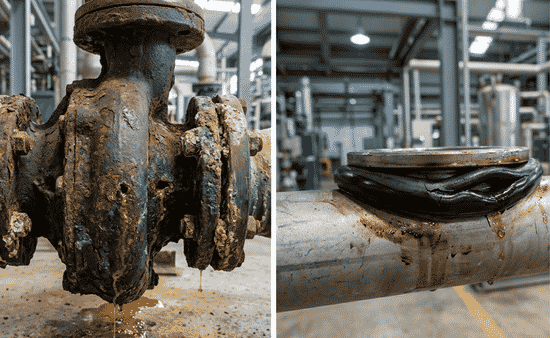
Learning from common mistakes can save your facility significant time and money. Here are two frequent examples of incompatibility.
Corrosive fluids with unsuitable metals
A common error occurs when operators use standard carbon steel or cast iron to pump sulfuric acid. The acid aggressively attacks the iron, stripping away the metal and causing rapid rusting. Within weeks, the casing wall thins out, leading to pinhole leaks and a total loss of system pressure.
Swelling of elastomers with certain chemicals
Another frequent issue involves mismatching O-rings with hydrocarbon fluids. If you use an EPDM seal in an application pumping petroleum-based oils, the rubber will rapidly absorb the oil. The elastomer swells, loses its shape, and eventually ruptures under pressure, causing fluid to spray out of the joints.
Best Practices for Ensuring Compatibility
Protecting your investment requires diligence during the purchasing phase and throughout the equipment’s lifecycle.
Thorough research and planning
Before purchasing any equipment, identify every characteristic of the fluid you intend to move. Document the chemical composition, concentration, maximum temperature, and presence of any abrasive solids. Share this comprehensive profile with the manufacturer to ensure every wetted component, down to the smallest internal gasket, is appropriately rated.
Regular maintenance and inspection
Even properly specified systems experience wear and tear. Implement a strict preventative maintenance schedule. Inspect casings for signs of pitting or discoloration, and check all seals for brittleness or swelling. Catching minor degradation early prevents catastrophic blowouts later.
Conclusion
To ensure a safe and efficient fluid handling system, it’s essential to match the fluid’s properties—like temperature, concentration, and pH—with the appropriate metals, plastics, and elastomers. Failing to do so can result in mechanical failures, hazardous leaks, and operational delays, compromising both equipment and personnel.