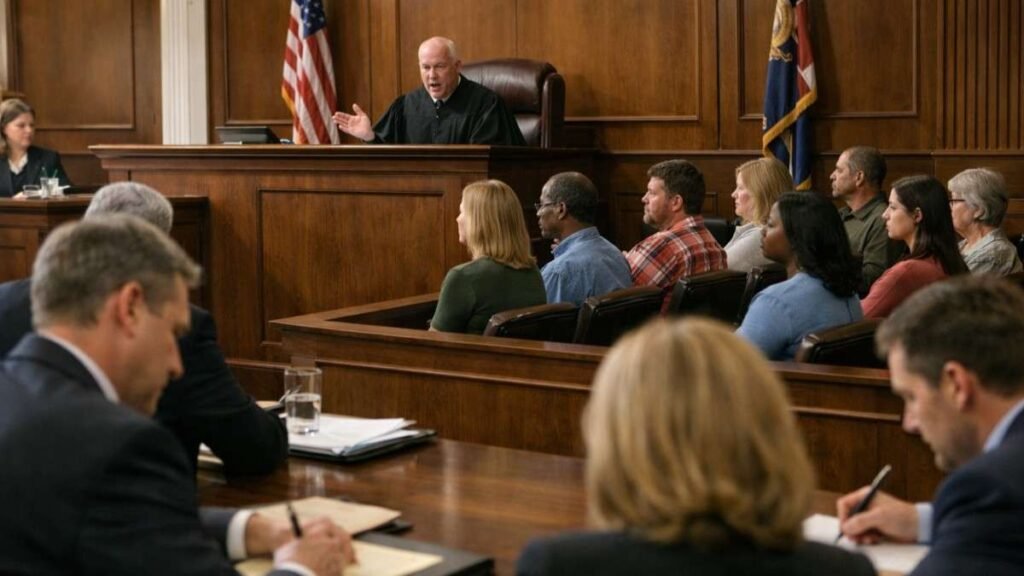

A few years ago I was watching a Supreme Court case discussion with a friend who loves constitutional debates. Halfway through the conversation we realized we were arguing about the same decision for completely different reasons. That was the first time I truly understood the debate around judicial activism vs judicial restraint.
The phrase might sound technical, but it actually explains how judges think about their role in democracy. Some judges believe courts should actively protect rights and correct injustices. Others believe courts should step back and let elected lawmakers decide policy. Once you understand judicial activism vs judicial restraint, Supreme Court decisions suddenly make much more sense.
What Is Judicial Activism vs Judicial Restraint?
At its heart, it describes two competing views about how judges should interpret the Constitution. These philosophies influence how courts evaluate laws, handle precedent, and decide constitutional disputes.
Judicial activism encourages courts to interpret the Constitution broadly and respond to modern social realities. Judicial restraint urges judges to interpret the law narrowly and defer to elected branches whenever possible.
Why The Debate Matters In Constitutional Law

The debate around judicial activism vs judicial restraint shapes major legal decisions across the United States. Every Supreme Court ruling reflects how justices balance judicial authority with democratic governance.
Some scholars argue courts must step in to defend constitutional rights. Others argue that too much judicial power risks undermining democracy by allowing unelected judges to influence public policy.
Key Differences Between Judicial Activism vs Judicial Restraint?
| Feature | Judicial Activism | Judicial Restraint |
| Interpretation | Flexible interpretation that treats the Constitution as a living document | Strict interpretation based on original intent or literal meaning |
| Role of Precedent | Willing to overturn precedent to correct injustice | Strong respect for precedent to maintain stability |
| Social Policy | Courts may shape social policy and expand rights | Courts defer policy decisions to legislatures |
| Judicial Power | Active use of judicial review to strike down laws | Limited use of judicial review unless a law clearly violates the Constitution |
This comparison highlights why judicial activism vs judicial restraint continues to shape debates about the role of the judiciary in American government.
What Is Judicial Activism?

Definition And Purpose Of Judicial Activism
Judicial activism refers to a philosophy where judges interpret the Constitution broadly and sometimes go beyond strict legal text to address evolving societal needs. Courts applying this philosophy may overturn laws that violate constitutional values or expand protections for individual rights.
Supporters of judicial activism believe courts should act when government institutions fail to protect citizens. In this view, judges serve as guardians of constitutional principles.
Landmark Example And Criticism
One of the most famous examples associated with judicial activism is the Supreme Court decision in Brown v. Board of Education in 1954. The Court overturned decades of precedent that allowed racial segregation in public schools and ruled that segregation violated equal protection under the Constitution.
Critics often argue that judicial activism can lead to judges imposing personal views rather than following established law. They claim it allows courts to effectively create policy instead of interpreting it.
What Is Judicial Restraint?
Judicial restraint encourages courts to limit their role in policymaking and respect decisions made by elected branches of government. Judges following this philosophy typically interpret the Constitution narrowly and avoid striking down laws unless absolutely necessary.
Supporters argue this approach preserves democratic legitimacy. Legislatures, not courts, are responsible for making policy because they are accountable to voters.
Example And Criticism Of Restraint
A historical example often associated with judicial restraint is Plessy v. Ferguson in 1896. In this case the Supreme Court upheld state segregation laws by deferring to legislative authority.
Critics argue judicial restraint can sometimes allow unjust laws to remain in place. When courts refuse to intervene, minority rights may suffer if the majority supports discriminatory policies.
Why Does Judicial Activism vs Judicial Restraint Matter Today?
Understanding this helps explain why justices rule differently on controversial issues. Topics such as civil rights, healthcare, executive authority, and voting laws often reveal philosophical differences among judges.
A justice leaning toward activism may reinterpret constitutional protections to address modern challenges. A justice favoring restraint may argue that policy changes should come from legislatures rather than courts.
Impact On Political And Legal Debates
The debate over judicial activism vs judicial restraint appears frequently in political discussions. Supporters of a ruling may describe it as necessary constitutional interpretation while critics may label it activism.
These philosophical labels often influence how the public interprets Supreme Court decisions and judicial nominations.
How to Judicial Activism vs Judicial Restraint Step by Step
Step One: Examine Constitutional Interpretation

To understand judicial activism vs judicial restraint, start by analyzing how a court interprets the Constitution. If the decision expands constitutional meaning or adapts it to modern issues, it may reflect judicial activism. If the court emphasizes original intent and narrow interpretation, it likely reflects judicial restraint.
Step Two: Analyze The Court’s Decision
Next evaluate whether the court decides to overturn legislation or upheld it. Striking down laws or expanding rights often signals activism. Upholding laws and deferring to legislatures usually indicates restraint.
Step Three: Review Reasoning And Precedent
Finally review how the court treats precedent. Courts embracing activism may overturn earlier decisions if they believe justice requires change. Courts practicing restraint usually prioritize legal stability and maintain established precedent whenever possible.
Frequently Asked Questions
1. What is the main difference between judicial activism vs judicial restraint?
The primary difference lies in how judges interpret the Constitution. Judicial activism supports broader interpretation and court intervention to protect rights. Judicial restraint emphasizes limited judicial power and encourages courts to defer to legislatures unless laws clearly violate the Constitution.
2. Why is judicial activism controversial?
Judicial activism is controversial because critics believe it allows judges to influence policy decisions that should belong to elected lawmakers. Supporters argue courts must sometimes intervene when constitutional rights are threatened or when legislatures fail to protect minority groups.
3. Can judges follow both judicial activism and judicial restraint?
Yes, many judges apply both philosophies depending on the case. A judge may exercise restraint when dealing with economic regulation but adopt a more active approach when fundamental rights or constitutional protections are involved.
4. Why do political debates mention judicial activism vs judicial restraint so often?
Political debates reference judicial activism vs judicial restraint because Supreme Court rulings can shape public policy. When courts overturn laws or reinterpret constitutional rights, political leaders often frame those decisions using these philosophical labels.
Conclusion
The debate over judicial activism vs judicial restraint continues to influence how courts interpret the Constitution and shape American law. These philosophies represent different views about the proper role of judges in a democratic society.
Personally I find that understanding changes the way you read about Supreme Court cases. Instead of seeing decisions as purely legal outcomes, you begin to recognize the underlying philosophy guiding each ruling.