
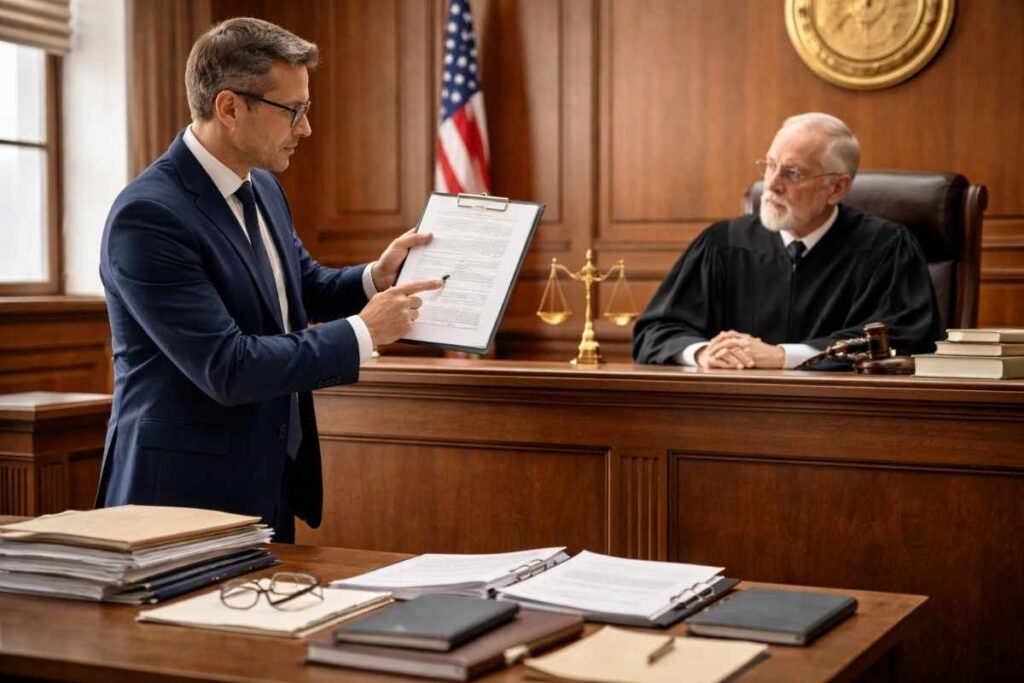
I remember sitting in a courtroom once, completely lost, hearing lawyers argue while the judge kept mentioning what is burden of proof. I nodded like I understood, but honestly, I did not. That moment pushed me to break it down in the simplest way possible so it actually makes sense in real life.
What Is Burden of Proof and How Does It Work?
In a legal setting, the burden of proof means one thing. It is the responsibility of a person or party to prove their claim using evidence. If they cannot do that, their case usually fails, no matter how confident they sound.
I always think of it as a rule of fairness. Courts do not assume anything is true just because someone says it. They require proof. This ensures that decisions rely on facts, not opinions or assumptions.
Breaking the concept into simple terms
The idea becomes easier when you look at it in everyday situations. If you claim something happened, you must back it up. You cannot expect others to disprove you first.
This principle also applies outside courtrooms. In debates, business decisions, and even casual arguments, the person making the claim carries the responsibility to support it.
What Are the Two Main Parts of Burden of Proof?
The concept of what is burden of proof becomes clearer when you break it into two key parts. These parts define how proof works in practice.
The first is the burden of production. This means you must bring enough evidence to even start a case. Without it, the claim never moves forward.
Understanding burden of production and persuasion
The second part is the burden of persuasion. This is where you must convince the judge or jury that your version of events is true.
I like to think of it this way. First, you show there is something worth discussing. Then, you prove your side strongly enough to win the argument. Both steps matter equally in a legal outcome.
What Are the Different Standards of Proof?
Not all proof is equal. Courts use different standards depending on the seriousness of the case. The standard of proof decides how strong your evidence must be. The higher the stakes, the higher the standard becomes.

Common Standards Explained In Simple Language
In criminal cases, the standard is beyond a reasonable doubt. This means the jury must feel almost certain about guilt. There should be no logical alternative explanation.
In serious civil matters, courts use clear and convincing evidence. This means the claim must be highly believable and strongly supported.
In most civil cases, the standard is preponderance of the evidence. This simply means the claim is more likely true than not. Even a slight edge in probability can meet this standard.
Who Has the Burden of Proof in Different Cases?
Understanding what is burden of proof also means knowing who carries it. This depends on the type of case.
In criminal cases, the prosecution always carries the burden. The law follows the principle that a person is innocent until proven guilty. This protects individuals from unfair punishment.
Civil cases and shifting responsibility
In civil cases, the plaintiff usually carries the burden. They must prove that the defendant caused harm or damage.
There are exceptions. If a defendant claims something like self-defense or insanity, the burden can shift. In those situations, they must prove their specific claim.
How Does Evidence Support the Burden of Proof?
Evidence is what makes or breaks a case. Without it, even the strongest claim falls apart.
I always focus on how evidence connects directly to the claim. Random or weak evidence does not help. It must clearly support the argument being made.

Types of evidence that matter most
Physical evidence like contracts, photos, or documents often carries strong weight. It provides something concrete that cannot easily be disputed.
Witness testimony also plays a key role. In today’s world, digital evidence such as emails and messages has become just as powerful in proving claims.
How to What Is Burden of Proof Step by Step
When I try to apply what is burden of proof, I follow a simple process that keeps things clear and practical. It helps me understand any situation quickly.
- First, I identify who is making the claim. That person usually carries the burden. This step alone removes a lot of confusion right away.
- Next, I determine the type of case. Civil cases require a lower standard, while criminal cases demand much stronger proof. This helps me set the right expectations.
- Then, I gather evidence that directly supports the claim. I avoid unnecessary details and focus only on facts that clearly prove the point.
- Finally, I compare the evidence against the required standard. If the evidence meets that level, the burden is satisfied. If not, the claim likely fails.
What Are Common Mistakes About Burden of Proof?

Many people misunderstand how this concept works. I see this happen all the time in discussions and arguments.
One common mistake is thinking both sides must prove everything equally. That is not true. The burden usually sits with one party unless it shifts.
Another mistake is believing that strong opinions count as proof. Courts rely on evidence, not feelings or beliefs. People also assume that more evidence always wins. In reality, clear and relevant evidence matters more than large amounts of weak information.
Frequently Asked Questions
1. What is burden of proof in simple words?
It is the responsibility to prove a claim using evidence in a legal or logical situation.
2. Who has the burden of proof in most cases?
Usually the person making the claim, such as the plaintiff or prosecution.
3. What happens if the burden is not met?
The case or claim usually fails, even if it sounds convincing.
4. Does burden of proof apply outside court?
Yes, it applies in debates, discussions, and everyday decision making.
Now You Know What Is Burden of Proof
Understanding what is burden of proof completely changed how I think about claims, arguments, and decisions. I now focus on evidence instead of assumptions. If you take one thing from this, let it be this simple rule. Whoever makes the claim must prove it. That mindset alone can make your thinking sharper and more effective.