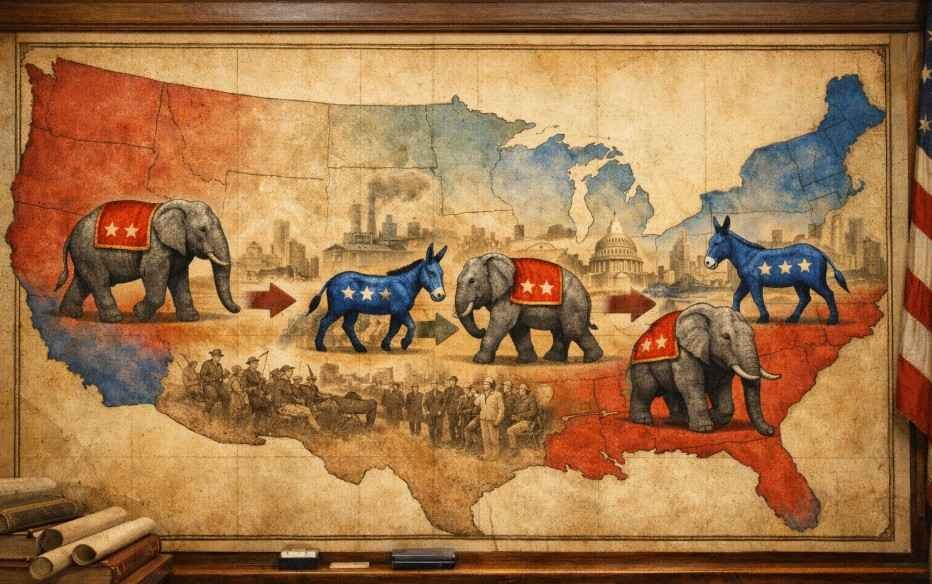
I still remember the first time someone casually asked me, “when did the republican and democratic parties switch?” We were sitting around talking about American history, and I realized I did not have a clear answer. Like many people, I assumed there must have been a specific year when the parties suddenly flipped their beliefs.
Understanding when did the republican and democratic parties switch helps make sense of modern American politics. The story involves major historical moments such as Reconstruction, the Great Depression, and the Civil Rights movement. Each stage slowly reshaped how Americans viewed the two major political parties.
What Happened During The Post Civil War Era Resulting Republican And Democratic Parties Switch?
The first stage in the story of republican and democratic parties switch begins:
Post Civil War political landscape

The first stage in understanding when did the republican and democratic parties switch began after the Civil War, roughly between the 1860s and 1890s. During this period, the Republican Party was widely associated with abolition, national unity, and rebuilding the country after the war.
Reconstruction and civil rights policies
Republicans supported Reconstruction policies aimed at protecting the rights of formerly enslaved people in the South. They backed federal laws and constitutional amendments that expanded citizenship and voting rights.
The rise of the “Solid South”
Many Southern Democrats strongly opposed Reconstruction policies. They argued that states should control their own political systems. As a result, Democrats remained dominant across much of the South, a region that later became known as the “Solid South.”
New Deal Era Reshape The Republican And Democratic Parties Switch
The next major chapter in understanding when republican and democratic parties switch occurred during the Great Depression in the 1930s.
The Great Depression Shifts Political Thinking

The next key phase in understanding when did the republican and democratic parties switch happened during the Great Depression of the 1930s. The economic collapse forced Americans to rethink how much the federal government should intervene in the economy and daily life.
The New Deal Expands Federal Involvement
President Franklin D. Roosevelt responded with the New Deal, a series of programs meant to stabilize the economy and support struggling families. These policies increased federal involvement in job creation, financial regulation, and economic recovery. Republicans increasingly emphasized limited government and market solutions.
Voters And Alliances Begin To Realign
The New Deal drew working class voters, immigrants, and labor unions toward the Democratic Party. Meanwhile, many business leaders and fiscal conservatives moved closer to the Republican Party, which increasingly promoted limited government spending and market driven policies..
Did The Civil Rights Era Influence The Republican And Democratic Parties Switch?
The final and most visible stage in when did the republican and democratic parties switch took place between the 1940s and the 1960s. During this time, the Civil Rights movement pushed the federal government to confront racial inequality.
In 1948, President Harry Truman introduced a civil rights platform within the Democratic Party. Later, President Lyndon B. Johnson signed the Civil Rights Act of 1964 and the Voting Rights Act of 1965. These laws aimed to dismantle segregation and protect voting rights.
While many Americans supported these reforms, some Southern voters opposed them. Political strategists within the Republican Party began appealing to conservative voters in the South. This approach later became known as the Southern Strategy.
What Was The Result Of When Did The Republican And Democratic Parties Switch?
By the 1980s, the transformation connected to when did the republican and democratic parties switch was largely visible in election results.
Southern voting shift
The South, once solidly Democratic, began voting more consistently for Republican presidential candidates. Over several decades, election results showed a steady movement toward the GOP across many Southern states.
Changing voter coalitions
Republicans gained stronger support from conservative voters, suburban communities, and much of the South. Meanwhile, Democrats built a base among urban voters, labor unions, minority communities, and younger generations.
Formation of the modern party landscape
This gradual realignment shaped the political system Americans recognize today. While some overlap still exists, the two parties developed distinct positions on government policy, economic regulation, and civil rights.
Understanding When Did The Republican And Democratic Parties Switch Part By Part
Part 1: Study the origins of the two parties
The first step in understanding when did the republican and democratic parties switch is to examine how the parties originally formed. The Republican Party emerged in the 1850s with a platform opposing slavery expansion, while Democrats were a broader coalition that included many Southern political leaders.
Part 2: Examine the economic shift of the New Deal
The second step is to look at how the Great Depression reshaped party alliances. Franklin Roosevelt’s New Deal programs expanded federal authority and attracted workers, unions, and urban voters to the Democratic Party.
Part 3: Review the civil rights turning point
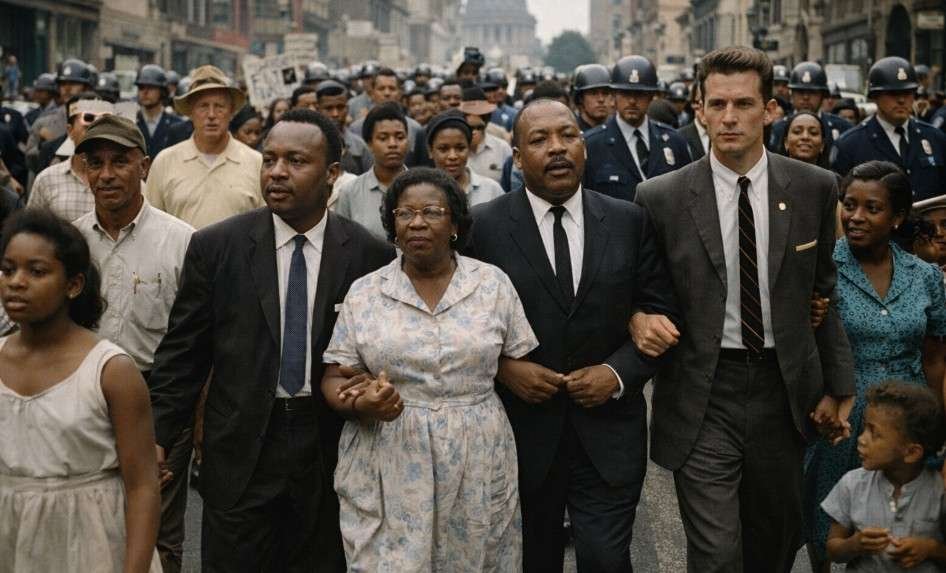
The third step is to study the civil rights legislation of the mid twentieth century. As Democrats increasingly supported civil rights reforms, some conservative voters moved toward the Republican Party, particularly in Southern states.
Part 4: Track long term voting patterns
The final step is to review election results from the 1960s through the 1980s. These elections show how voter coalitions shifted regionally and gradually produced the modern political alignment.
Frequently Asked Questions
1. Did the republican and democratic parties completely switch ideologies?
The parties did not suddenly swap beliefs in a single moment. Historians describe the change as a gradual realignment. Over several decades, economic priorities, civil rights positions, and voter groups shifted, creating the modern political differences between Republicans and Democrats.
2. When did the republican and democratic parties switch in the South?
The most visible shift in the South occurred between the 1960s and the 1980s. Civil rights legislation, changing economic priorities, and new campaign strategies gradually moved many Southern voters toward the Republican Party.
3. Why do people believe the parties flipped overnight?
Many people compare the Civil War era with modern politics and assume the parties completely reversed positions. In reality, the change happened slowly through multiple historical events and shifting voter coalitions.
4. Is the realignment connected to modern elections?
Yes. Modern political voting patterns still reflect the changes that occurred during the twentieth century. Regional voting behavior, party platforms, and voter demographics today are partly shaped by the long process of when did the republican and democratic parties switch.
Conclusion
So when did the republican and democratic parties switch? The honest answer is that it did not happen in a single year or election. Instead, the transformation unfolded gradually from the Post Civil War era through the New Deal and Civil Rights movements.