
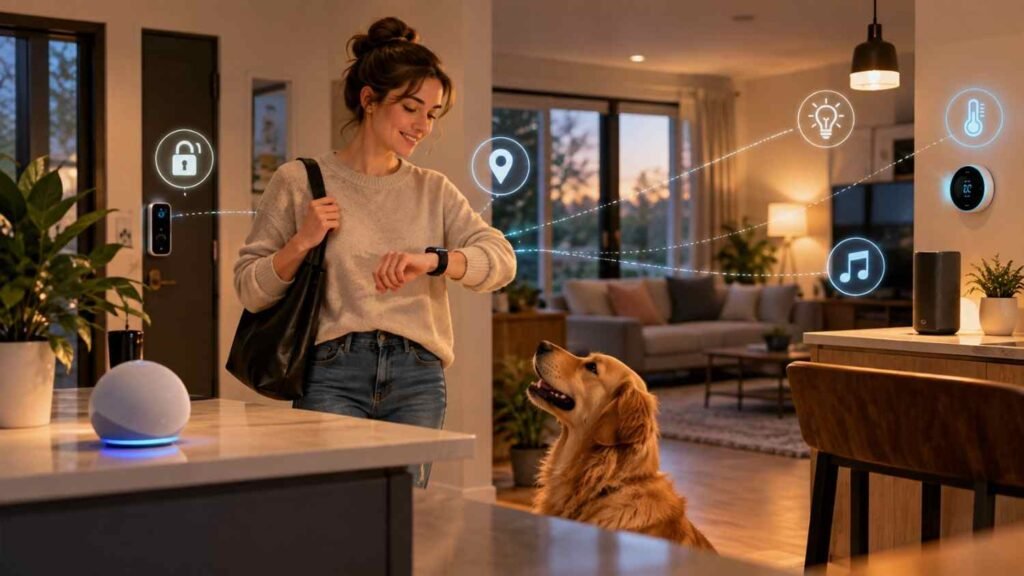
I started noticing that smart devices feel less like gadgets waiting for instructions and more like observers of what is happening around me. My phone seems to understand when I am moving, my watch can recognize activity, and connected home devices can react to changes without needing a spoken command. The difference is subtle, but it changes how technology fits into ordinary routines.
I realized the biggest shift is not simply that devices have become more powerful. They have become better at interpreting circumstances. A thermostat can consider occupancy and temperature, while a wearable can combine signals to understand what I am doing. That ability to recognize context is making connected technology more useful, but it also raises questions about how much information these systems should collect and how it should be handled.
What Makes a Device Context Aware?
A traditional smart device waits for an instruction: tap a button, say a command, or trigger an automation. A context-aware device has a wider view. It considers where something is happening, when it is happening, what the user appears to be doing, and what environmental signals are changing.
Context can include location, motion, temperature, light, sound, time, proximity, occupancy, and patterns of use. The value comes from combining them. A phone that knows it is nighttime has one piece of information. A phone that also detects its owner is home and inactive has a richer picture.
That is the foundation of context-aware technology. Instead of treating every event as isolated, the system tries to understand the situation surrounding it.
Sensors Give Devices More Clues
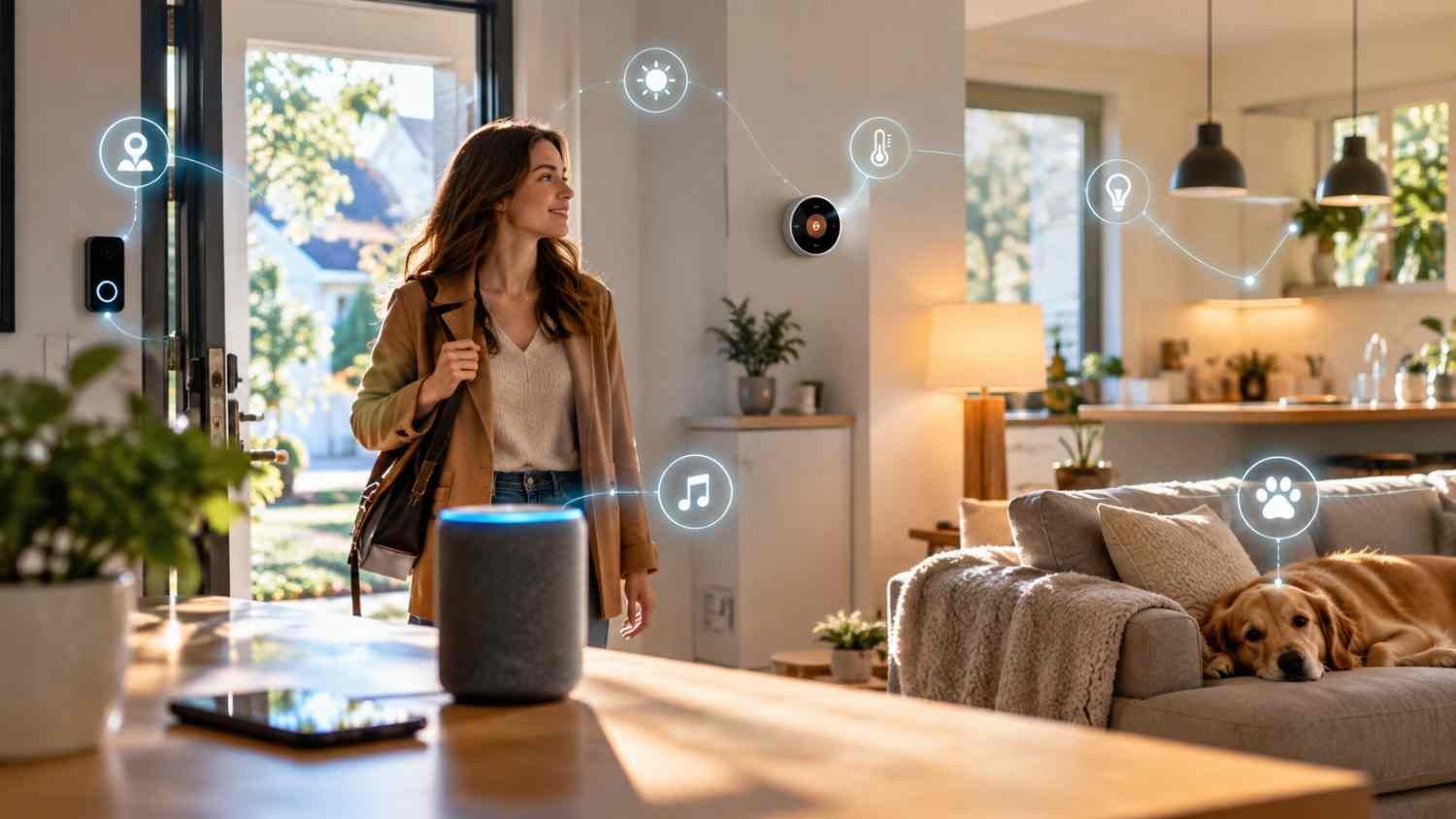
Sensors are central to this shift. Smartphones contain location and motion capabilities, while watches and fitness trackers gather movement and other physical signals. Smart homes add temperature sensors, door contacts, cameras, microphones, light sensors, and occupancy detection.
Motion near a front door could mean someone arrived home, a pet moved through the area, or a delivery was left outside. Combining motion with location and time can produce a more useful interpretation.
This approach is often called sensor fusion. Instead of trusting one measurement, software compares multiple signals and looks for a pattern that makes sense.
AI Helps Devices Interpret Context
Raw sensor data is not especially helpful by itself. AI and machine learning provide the layer that can identify patterns within it. Over time, a system may learn recurring behaviors, such as when a household is usually occupied, when lights are commonly turned on, or when a person typically starts a workout.
Algorithms recognize relationships between signals and outcomes. With enough context, a device can move from reacting to an event toward anticipating a likely need.
Local AI inference helps when decisions need to happen quickly. Processing information near the device can reduce latency and may limit how much data travels to a remote server.
Smart Devices Are Becoming More Proactive
A smart home might adjust lighting when someone enters a room, change climate settings based on occupancy, or reduce energy use when parts of the house are empty.
Phones and wearables can adapt notifications and activity features based on time, location, movement, or behavior. Connected cars can use surrounding information to support navigation and other features.
The important change is conditional automation. Instead of saying, “Turn the lights on at 7 p.m.,” a user can have a system respond when the right circumstances occur. Automation feels less rigid and more natural.
Context Awareness Can Improve Everyday Convenience
The biggest benefit is less friction. People do not have to manually adjust every setting when a device can handle routine decisions. Context-aware systems can also support energy efficiency, accessibility, safety, and personalization.
A device can respond differently when a home is occupied than when everyone has left. A wearable can recognize exercise without requiring a manual start. An assistant can provide information that fits the current situation.
Multimodal systems strengthen this capability by combining input. Audio, movement, visual information, location, and environmental data can create a richer picture.
The Privacy Tradeoff Is Becoming More Important
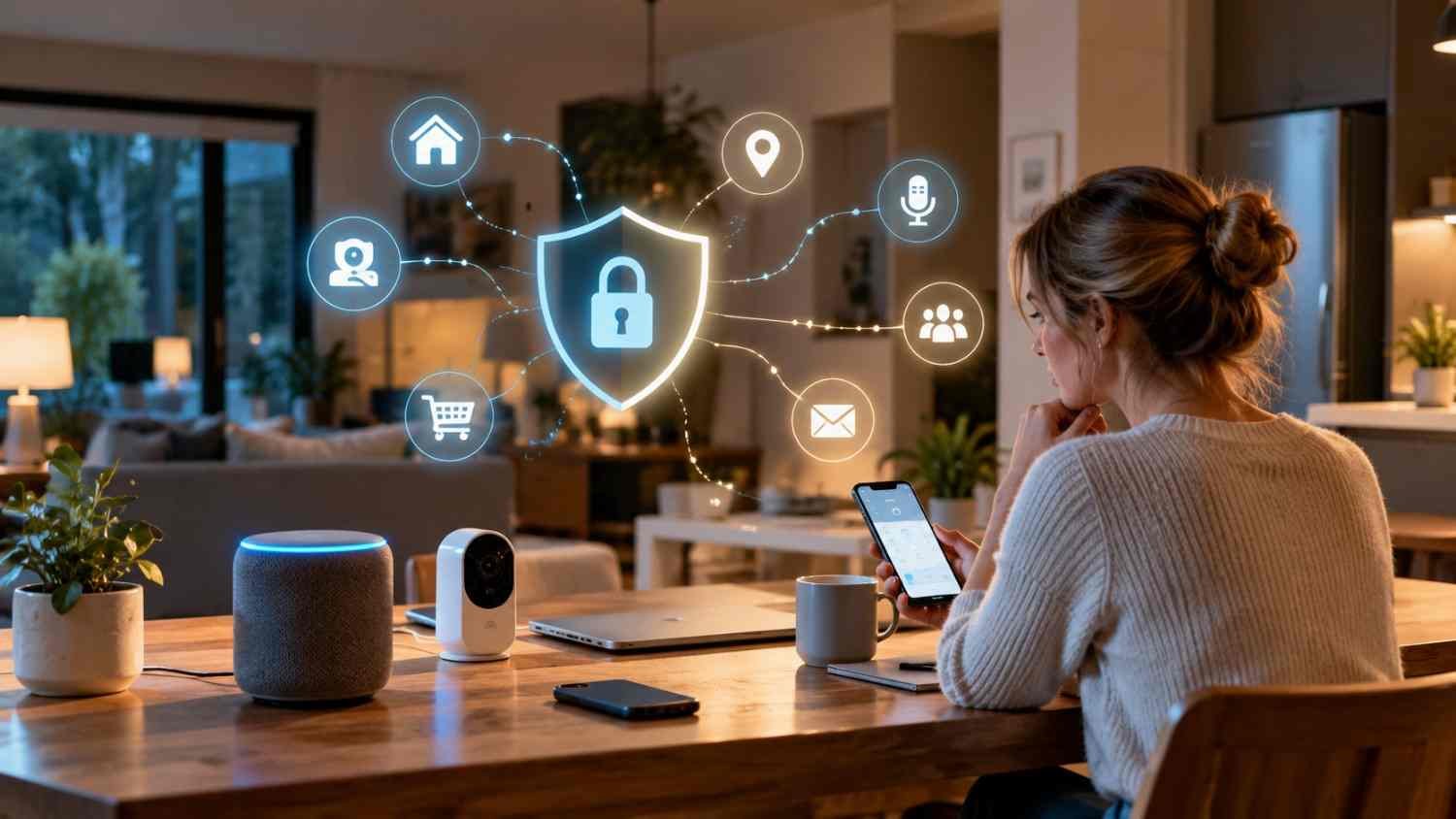
Greater awareness requires more context, and context can reveal personal details. Location patterns, routines, household occupancy, health-related signals, voice data, and device interactions can collectively reveal far more than one sensor.
That makes technology and digital privacy an increasingly important part of the conversation. Privacy is not only about encryption. It involves what gets collected, where processing occurs, how long information is retained, who can access it, and whether users understand device behavior.
On-device processing can help, but it is not a complete privacy solution. Strong permissions, data minimization, secure software, and meaningful user controls still matter.
Where Context-Aware Devices Are Heading
The next stage is likely to involve devices working together rather than becoming smarter in isolation. A phone, watch, car, speaker, and thermostat can each contribute pieces of context.
That could make technology feel increasingly ambient. Instead of opening an app for every task, people may interact with systems that recognize circumstances and offer assistance at the appropriate moment. Wi-Fi sensing can detect movement and presence without conventional cameras or microphones.
The challenge is getting the balance right. A device that understands too little becomes frustrating; one that assumes too much can become intrusive. Accuracy, transparency, security, and easy overrides will matter.
Why Smarter Devices Still Need Boundaries
Context awareness is changing what a smart device means. Intelligence no longer means simply responding faster or offering more features. It increasingly means recognizing circumstances, connecting signals, and choosing a response that fits what is happening.
That shift can make technology feel seamless. The best systems will not collect the most information or make the most decisions alone. They will understand enough to be useful while giving people a clear say in what is observed, inferred, and shared.
FAQs: How Smart Devices Are Becoming More Context Aware and Helpful
1. What is a context-aware smart device?
It uses information about surroundings, timing, location, activity, or user behavior to adapt its response instead of relying only on direct commands.
2. How do smart devices understand context?
They combine signals from sensors, connected devices, software, and machine learning models. Multiple inputs can help identify patterns that one sensor cannot reliably detect.
3. Does context awareness create privacy concerns?
Yes. Context can include sensitive information such as location, routines, health signals, and household activity. Responsible collection and strong user controls are essential.
4. Can context-aware devices work without cloud processing?
Sometimes. Edge AI allows certain analysis and decisions to happen locally. This can reduce delays and may reduce the need to send raw information to the cloud.