
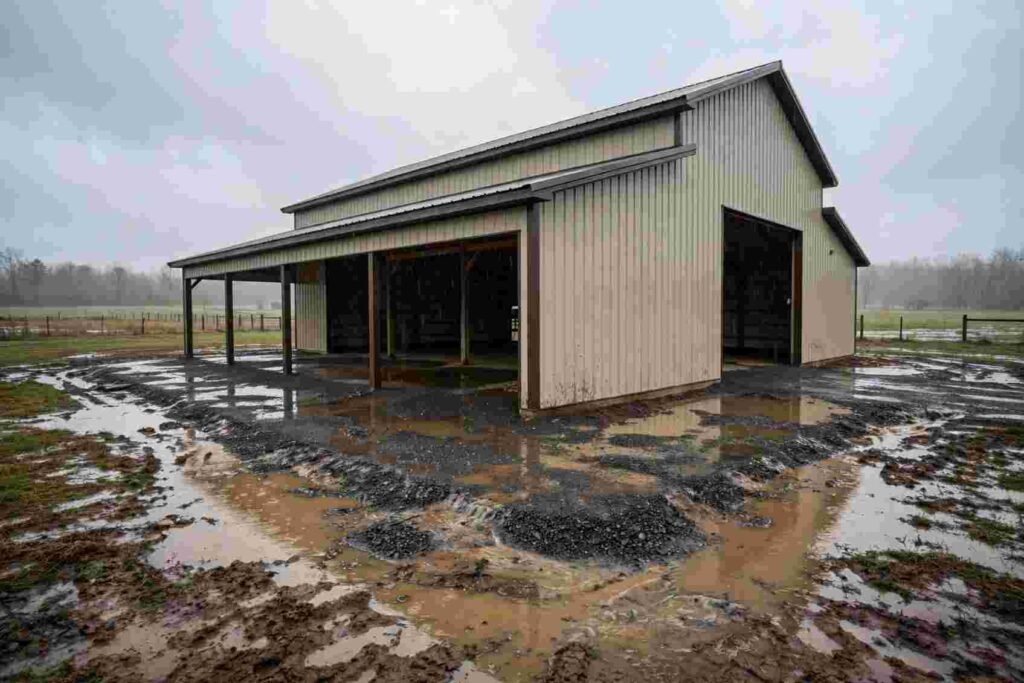
When building a post-frame barn, stable, or shop, owners naturally focus on framing, metal siding, and trusses. Yet structural longevity starts beneath your feet in the engineered pad and subgrade.
A barn pad is only as durable as its drainage design.
Water is the primary enemy of earthwork. When rain, snowmelt, and roof runoff pool around your building rather than shedding away, moisture saturates underlying soil. Over time, chronic wetness degrades shear strength, washes away fines, and destabilizes the compacted base.
Catching moisture issues early prevents structural failure. Here are five signs poor barn pad drainage is ruining your subgrade—and how to fix them.
1. Soil “Pumping” and Spongy Interior Floor Ground
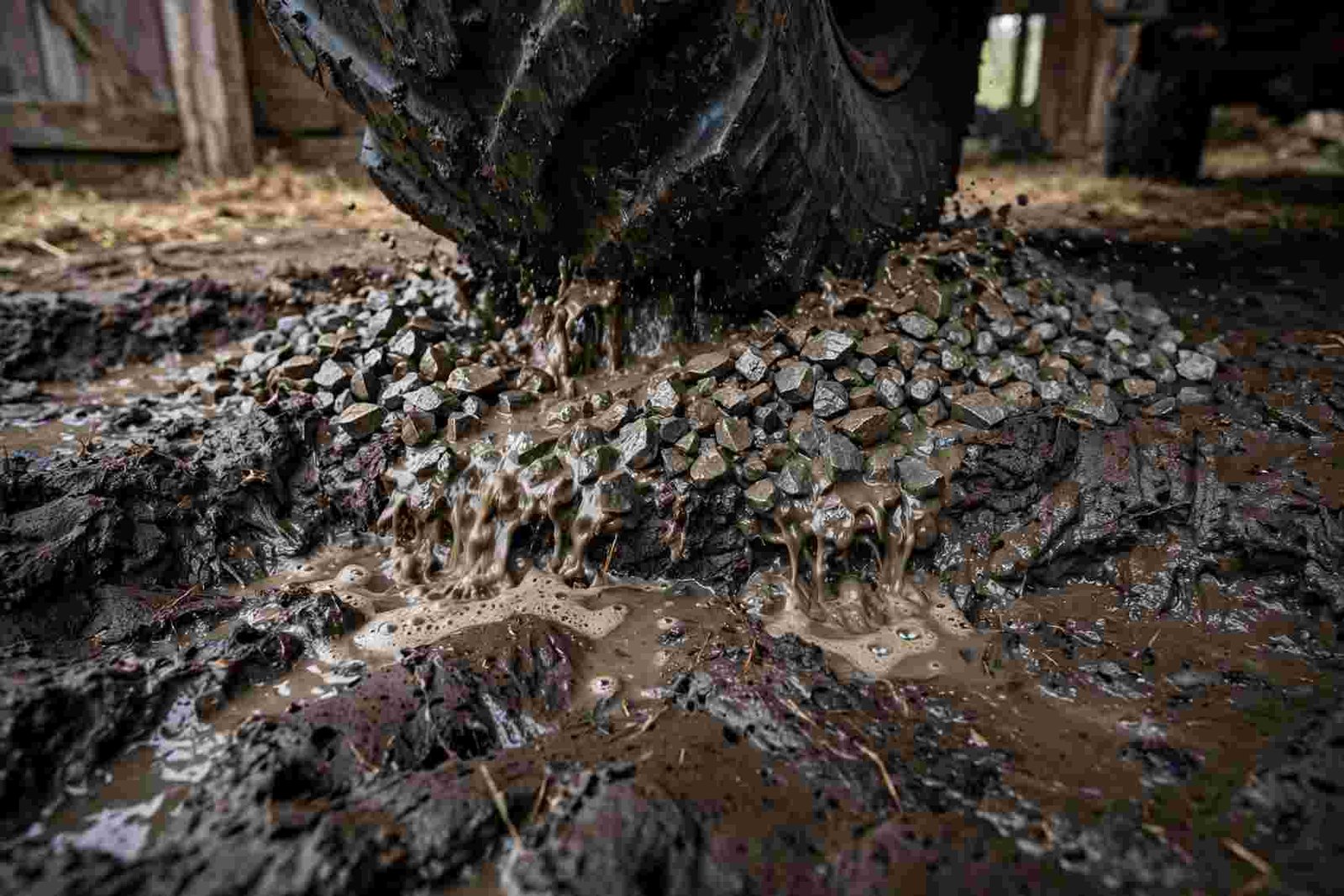
The quick answer: When equipment causes interior ground to deflect or pump mud upward, the subgrade has lost bearing capacity from saturation.
In proper barn pad site preparation, native soils are compacted and capped with crushed aggregate. When drainage fails, subsurface moisture becomes trapped beneath the stone.
This dynamic triggers geotechnical “pumping”:
- Pore Pressure: Machinery and livestock press down on wet subgrade, forcing trapped pore water to the surface.
- Loss of Shear Strength: High subgrade soil saturation softens clay and silt particles, turning a hard pad spongy.
- Base Contamination: Mud pumps upward into clean stone, destroying aggregate interlock and ruining the floor foundation.
2. Sticking Sliding Doors and Shifting Frame Posts
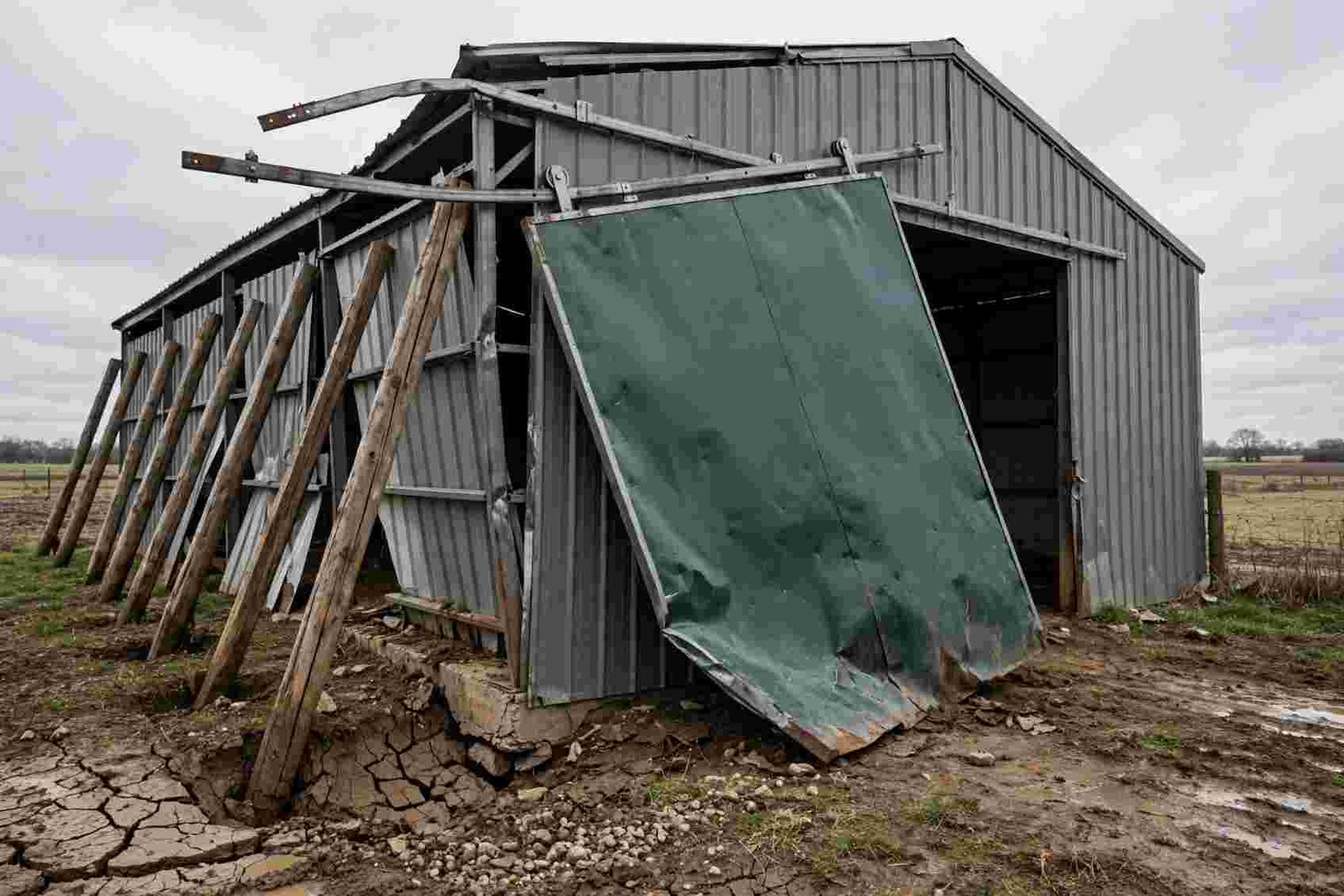
The quick answer: Binding track doors and jammed latch pins indicate that uneven pad drainage is causing differential settlement under posts.
Post-frame buildings flex under wind, but movement in interior framing points to shifting post footings. When one side of a pad receives heavy roof runoff while the other stays dry, soil softens unevenly.
This moisture disparity causes differential foundation settlement:
- Uneven Bearing: A post in dry, compacted clay supports loads easily, while a neighboring post in saturated mud sinks under identical weight.
- Binding Hardware: Sliding doors bind on overhead tracks, latch pins misalign, and diagonal wall bracing bows.
- Compromised Fasteners: As posts settle unevenly, roof trusses twist and siding fasteners back out under racking stress.
3. Perimeter Trenching and Water Pooling Along the Drip Line
The quick answer: Eroded gravel along eaves and standing water near the barn indicate grading is directing roof runoff into the subgrade.
A standard 40×60-foot barn roof sheds over 1,500 gallons of water during a one-inch rainstorm. Without gutters and swales, runoff cascades directly off eaves.
Unchecked runoff creates immediate drainage failures:
- Perimeter Scouring: Falling water cuts trenches into aggregate skirts, exposing subgrade edges.
- Inward Water Migration: Pooling water flows beneath splash boards and soaks under the barn floor.
- Capillary Action: Trapped perimeter water wicks horizontally beneath the pad, turning dry stall dirt into mud.
4. Severe Frost Heave and Winter Ground Buckling
The quick answer: Freezing water expands by 9%, causing saturated subgrades to heave upward, cracking concrete slabs and dislodging posts.
In cold climates, poor drainage becomes destructive once temperatures drop below freezing. Dry soils rarely heave; saturated soils heave aggressively.
During freeze-thaw cycles:
- Ice Lenses: Subsurface moisture freezes into horizontal ice lenses, drawing deeper water toward the frost line.
- Upward Thrust: Expanding soil exerts immense pressure, cracking concrete slabs and lifting foundation posts.
- Thaw Subsidence: In spring, ice lenses melt into soupy mud, causing the ground to settle unevenly and leaving voids beneath slabs.
5. Chronic Concrete Efflorescence and Sweating Slabs
The quick answer: White mineral powder or dark damp stains on concrete reveal hydrostatic pressure pushing ground moisture up through the slab.
If your barn features poured concrete, inspect the surface. Concrete acts like a dense sponge; without a vapor barrier and dry subgrade, it draws moisture from the ground.
Watch for these moisture signals:
- Efflorescence: Water moving up through concrete dissolves mineral salts, leaving chalky white residue on the surface.
- Sweating Slabs: Floors stay slick not from air condensation, but from hydrostatic pressure pushing moisture through the slab.
- Delaminating Coatings: Epoxy coatings, sealers, and rubber mats bubble, peel, or trap mildew.
Selecting moisture-resistant materials and durable surface finishes is essential for preventing water damage and maintaining long-lasting structures. These considerations also apply to residential improvements, as discussed in these bathroom makeover expert design tips.
6. Engineered Solutions: Restoring Pad Drainage and Subgrade Integrity
The quick answer: Correcting drainage requires establishing a 3% to 5% exterior slope, installing perimeter French drains, and ensuring proper subgrade compaction.
Correcting subgrade failure is difficult once a barn is built, making proper site work critical.
Incorporating practical home design principles during the planning stage helps property owners balance structural requirements, site conditions, and long-term functionality.
When building on challenging ground—such as expansive clays or alluvial silt—relying on professional earthmoving expertise is essential.
Contractors specializing in site prep and excavation in Utah understand how heavy snowmelt, rocky terrain, and freeze-thaw cycles affect soil bearing capacity. Professional excavation teams strip topsoil, lay woven geotextiles, and compact engineered road base to establish an unyielding pad.
To protect an existing barn from drainage issues:
- Slope Away from Walls: Grade ground to fall at least one inch per foot for the first ten feet.
- Install Gutters: Route roof runoff into underground pipes discharging far downhill from the pad.
- Add Curtain Drains: Install gravel-filled French drains on uphill slopes to intercept surface runoff before it reaches the building.
A barn’s stability depends entirely on the ground beneath its footings. When drainage fails, saturated subgrades lose bearing capacity, trigger frost heave, and cause structural settlement that cosmetic fixes cannot solve.
Watching for soil pumping, sticking doors, perimeter erosion, and slab efflorescence helps you catch drainage flaws early. Investing in proper surface grading, perimeter swales, and engineered site preparation protects your subgrade, ensuring your barn remains solid, dry, and structurally sound for decades.