
A laundry basket can reveal more about independence than a lecture ever will. I see everyday household tasks as opportunities for teenagers to practice remembering, planning, and following through. The challenge is helping them take ownership without turning every unfinished job into an argument.
For me, teaching teenagers responsibility through everyday chores starts with meaningful work, clear expectations, and room to learn. A teenager who manages laundry or prepares dinner practices skills they will eventually need outside the family home. The aim is steady progress toward becoming a dependable contributor.
How Do Everyday Chores Build Responsibility?
Chores make responsibility visible. When teenagers wash dishes, everyone has clean plates. When they forget the recycling, someone must handle the overflow. These ordinary outcomes connect individual actions with shared needs.
Household responsibilities also offer practice in time management, cooperation, and problem-solving. A teen preparing dinner must consider ingredients, timing, and cleanup. Completing that sequence requires more thought than following a single instruction.
I would distinguish personal responsibilities from family contributions. Keeping a bedroom tidy matters, but cleaning a shared bathroom teaches consideration for other people too. Both belong in a balanced routine.
Which Chores Should Teenagers Start With?
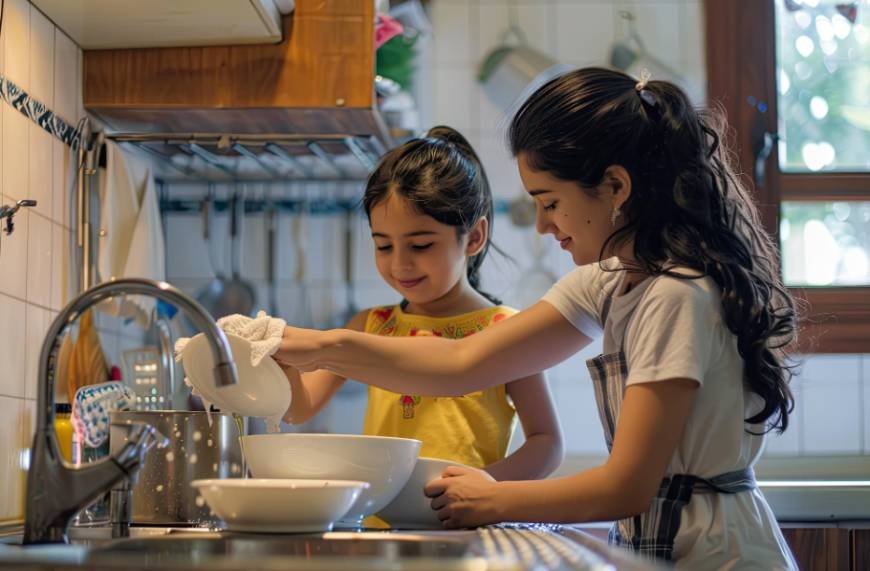
Choose age-appropriate chores according to experience, ability, and the support available. A teenager learning household skills may need a smaller starting task than someone who already cooks confidently.
Laundry Builds Planning and Follow-Through
Laundry involves sorting clothes, choosing settings, drying, folding, and putting everything away. Teach the complete process gradually. Explain garment labels and detergent amounts before expecting independent results.
A useful deadline might be having school clothes ready the evening before they are needed. That gives the task a practical purpose.
Meals Teach Preparation and Decision-Making
Start with preparing breakfast, packing lunch, or helping with dinner. Later, invite your teen to plan a simple family meal, check ingredients, compare grocery prices, and clean the kitchen afterward.
Working within an agreed budget adds another responsibility: making choices with limited resources.
These same planning skills can extend beyond household tasks when teenagers help organize family activities, including learning how to plan a family road trip through Tennessee by comparing routes, costs, timing, and practical needs. Giving them a role in these decisions helps turn everyday responsibilities into useful preparation for independent life.
Shared Spaces Encourage Cooperation
Taking out trash, unloading the dishwasher, vacuuming, and cleaning bathroom surfaces help teenagers contribute beyond their own belongings.
Pet care can teach consistency, but adults must ensure animals receive essential care. Seasonal yardwork and car washing offer variety when suitable equipment, instruction, and supervision are available.
How Can I Teach a Chore Without Taking Over?

Explain the task, demonstrate it, practice together, and then let your teenager try. Watching an adult once does not necessarily establish competence.
Replace vague directions with observable expectations. “Clean the bathroom” might mean wiping the sink, cleaning the toilet, checking the mirror, and putting supplies away. Agree on those details beforehand.
Ask your teen to check the finished result. This encourages self-assessment rather than dependence on your approval.
Avoid automatically redoing acceptable work because you prefer a different method. Correct genuine problems calmly and explain what needs improvement. Allowing practice gives teenagers a chance to become capable.
How Do I Create a Routine Without Constant Reminders?
A workable chore routine identifies the task, its owner, and its deadline. A teenager chore chart, shared calendar, or simple checklist can keep those agreements visible.
For teaching teenagers responsibility through everyday chores, I would give teens some choice over tasks and timing. They might prefer handling dishes after dinner or vacuuming on Saturday morning. Choice can coexist with firm expectations.
Encourage them to select their own reminder, such as an alarm or calendar notification. At the same time, parents can help teenagers develop healthier boundaries around device use. Practical Ways to Spend Less Time on Your Phone can help families distinguish between using technology as a useful organizational tool and allowing it to become a source of distraction. Begin with manageable commitments and review them briefly each week.
Discuss homework, activities, and employment before setting deadlines. During unusually demanding weeks, adjust the schedule together instead of waiting for conflict.
What Should I Do When My Teen Refuses Chores?

First, identify the obstacle. Does your teenager understand the task? Have they learned the necessary skills? Is the workload realistic, or does the arrangement feel unfair?
If starting feels overwhelming, divide the job into smaller steps. Written instructions, accessible supplies, and an initial practice session may help.
When a clear agreement is missed, discuss how to repair the situation. Forgotten laundry might mean washing the needed clothes that evening. An unfinished shared task still needs a new completion time.
Keep consequences proportionate and related to the agreement. Protect food, sleep, safety, and essential care. Avoid humiliation or assigning extra chores as punishment.
Recognize specific progress: remembering a deadline or finishing cleanup without prompting deserves acknowledgment.
Should Teenagers Receive Money for Chores?
Families can reasonably choose different approaches. Some treat routine household work as an unpaid contribution and offer payment for occasional additional projects. Others connect agreed chores with an allowance.
Explain the arrangement in advance, including completion standards and payment timing. Avoid offering money only after refusal, which makes expectations harder to maintain.
Whichever approach you choose, keep the emphasis on competence, fairness, and reliable follow-through.
Frequently Asked Questions
1. What Is the Best Way to Begin Teaching Responsibility?
Begin teaching teenagers responsibility through everyday chores with one manageable task. Demonstrate it, define completion, agree on a deadline, and review progress together.
2. How Many Chores Should a Teenager Have?
There is no universal number. Consider difficulty, time, existing commitments, and ability. Start small and expand responsibilities as skills develop.
3. Should Siblings Have Identical Chores?
Fairness does not require identical jobs. Divide tasks according to ability and workload, while giving everyone opportunities to learn different skills.
4. How Can I Tell Whether the Routine Is Working?
Look for fewer reminders, more complete tasks, realistic planning, and earlier communication when schedules conflict.
Building Independence One Task at a Time
I would measure success by growing ownership: noticing what needs doing, making a plan, and completing the work. Clear instruction, reasonable expectations, and patient feedback make that progress possible. Everyday chores give teenagers repeated opportunities to become people others can depend on.
That sense of responsibility can eventually extend beyond the home, encouraging young people to pay attention to the communities around them and understand how Nashville’s growth is changing neighborhood life.